
Despite the anecdotal evidence on show in the comments on every single ConservativeHome story Conservative opinion of Cameron's performance hasn't really changed much and is overwhelmingly positive. His approval ratings have been slightly above the two thirds that elected him since his election and have changed only slightly during that period. The Catholic adoption agency row, the tax row and all the other assorted 'outrages' haven't really troubled the membership.
I'm not saying Cameron's programme doesn't at times deserve criticism but critics should not fool themselves into thinking they're speaking for the grassroots.
Saturday, February 10, 2007


Thursday, February 08, 2007
Proportional Representation
William Norton has an excellent piece on ConservativeHome's Platform attacking the idea that proportional representation is fair and pointing out the sacrifice that it requires in the link from constituency to MP.
I'd point to a few other flaws with proportional representation. First, it weakens government. Do we want to risk an Italian situation where there is no one ruling the country just a series of placeholder leaders trying in vain to get through some policy before their coalition collapses? While it may not be ideal that relatively small percentages of the electorate can gain control of the country surely it is preferable that the most popular single legislative programme is put into practice properly rather than admitting defeat and either having no stable government or a coalition offering a watered down blend of different programmes decided during negotiations after the election.
Secondly, it weakens accountability. At the moment someone votes Conservative, Labour or Liberal Democrat on a specific manifesto. If that party then governs poorly or ignores that manifesto they can be held accountable at the ballot box. By contrast, in systems of proportional representation you get coalitions and each coalition partner can blame the others for the mess that is made. They can accuse them of undermining the unity which was needed for the programme to work, they can say their policies have not been given a proper chance thanks to only parts of their manifesto being put into practice and it will be terribly hard to which party in the coalition is truly to blame when things go wrong.
Thirdly, proportional representation distances the process of political compromise from the people. In the UK under the present system the process of compromise within the left and right wing movements goes on before the election with the various parties debating internally and selecting their leaders in a reasonably democratic manner. The largest of these camps then gets to run the country. First past the post encourages parties to include relatively broad cross sections of opinion and punishes movements which cannot work together inside the same tent. This encourages social harmony by creating broad political alliances and encouraging people to appreciate what they have politically in common with others of a broadly similar philosophical outlook. People get used to compromise.
Finally, this means that people don't know what they are voting for which weakens democratic legitimacy. When voting for the Liberal in Germany you don't know if you will be contributing to the stability of a Social Democratic or Christian Democrat government. While the Liberals will try to get the best deal in terms of their manifesto they can their idea of the "best deal" might be quite different to that of those who voted for them.
Proportional representation is truly awful. Short of a senile Menzies Campbell firing Trident at "the Boche" it is the worst possible outcome of the next election.
I'd point to a few other flaws with proportional representation. First, it weakens government. Do we want to risk an Italian situation where there is no one ruling the country just a series of placeholder leaders trying in vain to get through some policy before their coalition collapses? While it may not be ideal that relatively small percentages of the electorate can gain control of the country surely it is preferable that the most popular single legislative programme is put into practice properly rather than admitting defeat and either having no stable government or a coalition offering a watered down blend of different programmes decided during negotiations after the election.
Secondly, it weakens accountability. At the moment someone votes Conservative, Labour or Liberal Democrat on a specific manifesto. If that party then governs poorly or ignores that manifesto they can be held accountable at the ballot box. By contrast, in systems of proportional representation you get coalitions and each coalition partner can blame the others for the mess that is made. They can accuse them of undermining the unity which was needed for the programme to work, they can say their policies have not been given a proper chance thanks to only parts of their manifesto being put into practice and it will be terribly hard to which party in the coalition is truly to blame when things go wrong.
Thirdly, proportional representation distances the process of political compromise from the people. In the UK under the present system the process of compromise within the left and right wing movements goes on before the election with the various parties debating internally and selecting their leaders in a reasonably democratic manner. The largest of these camps then gets to run the country. First past the post encourages parties to include relatively broad cross sections of opinion and punishes movements which cannot work together inside the same tent. This encourages social harmony by creating broad political alliances and encouraging people to appreciate what they have politically in common with others of a broadly similar philosophical outlook. People get used to compromise.
Finally, this means that people don't know what they are voting for which weakens democratic legitimacy. When voting for the Liberal in Germany you don't know if you will be contributing to the stability of a Social Democratic or Christian Democrat government. While the Liberals will try to get the best deal in terms of their manifesto they can their idea of the "best deal" might be quite different to that of those who voted for them.
Proportional representation is truly awful. Short of a senile Menzies Campbell firing Trident at "the Boche" it is the worst possible outcome of the next election.
Is Rape more important than the EU?
...a title I really hoped I'd never have to write.
Something about Caroline Hunt has really upset DK. I have to defend my fellow Conservative though as I really think he's rather missed the point on quite a few of her responses to PMQs (leaving aside the "what's the point of UKIP?" post which I've responded to in the comments on his blog and will return to later).
Firstly, the main problem Hunt raised was over the increase in the number of cases which surely is a problem. Now, a low conviction rate can either be because most of those being accussed are innocent or it can be because of some flaw in the judicial system which is making it unable to properly prosecute rape cases and get the guilty. It seems likely to me that it is a combination of the two. However, both are clearly a problem. Our justice system is clearly either unable to quickly determine false cases before they get to court or properly convict the guilty. Either way, Hunt is right to note that if "rape conviction is down and rape cases are up" that is not a good thing.
However, there are a great many questions which the public is concerned with and should be. Imagine a Venn diagram of poor topics for PMQs; you have a "the public doesn't care" and "the public shouldn't care". Europe is in the first category, Z-list celebrities in the second and UKIP policy is in both (joke). Rape is clearly in neither category.
The actual importance of PMQs is that it does feed into the media and does reach the common man; they may not know the stories but they do read about what the Prime Minister said in the paper. Hunt is right that, in political terms, PMQs is a great time to talk about issues which the public is interested in. Plenty of other time in the commons to talk about Europe. Of course, the EU can be a good subject for PMQs but there isn't really a lot of note going on there at the moment as everyone is still settling in after enlargement. Give it a couple of months and then maybe we'll have an attempt at a new constitution to oppose and the EU will be a PMQ worthy issue again.
They called in to her talkshow...
Firstly, the same is, I believe, true of leaving the EU which does not yet have a formal exit system, right? (I don't spend much time studying EU treaties so forgive my ignorance if there is already such a system) Do you think that would stop us? Does promising to leave the EU make the UKIP a bunch of, to use your charming phrase, ignorant fools or shameless liars?
Secondly, just because things are not possible in terms of the current treaties does not mean they are impossible. The EU still functions largely as an outcome of negotiations between governments. While we can't "promise" things we can promise to make them priorities in negotiations with the rest of the EU. Cameron has promised either to leave the Social Chapter in the same way UKIP has promised to leave the EU or has promised to make it a priority in negotiation. I don't know which but neither is inherently implausible.
Something about Caroline Hunt has really upset DK. I have to defend my fellow Conservative though as I really think he's rather missed the point on quite a few of her responses to PMQs (leaving aside the "what's the point of UKIP?" post which I've responded to in the comments on his blog and will return to later).
"Well, Caroline, it rather depends whether you think that cases should be judged on the evidence of whether you think that anyone accused ought to be automatically convicted, you stupid girl. Or would you set some targets?
"I'm sorry, Mr Smith; we all think that you're innocent, but we have to meet our targets so I'm afraid it's 15 years without parole for you.""
Firstly, the main problem Hunt raised was over the increase in the number of cases which surely is a problem. Now, a low conviction rate can either be because most of those being accussed are innocent or it can be because of some flaw in the judicial system which is making it unable to properly prosecute rape cases and get the guilty. It seems likely to me that it is a combination of the two. However, both are clearly a problem. Our justice system is clearly either unable to quickly determine false cases before they get to court or properly convict the guilty. Either way, Hunt is right to note that if "rape conviction is down and rape cases are up" that is not a good thing.
"Look, Caroline, a good proportion of the general public think that Z-List Celebrities are more important than the EU: should our MPs spend all their time discussing whether Rooney really did sleep with that prostitute? Or who's died this week on Eastenders?"
However, there are a great many questions which the public is concerned with and should be. Imagine a Venn diagram of poor topics for PMQs; you have a "the public doesn't care" and "the public shouldn't care". Europe is in the first category, Z-list celebrities in the second and UKIP policy is in both (joke). Rape is clearly in neither category.
The actual importance of PMQs is that it does feed into the media and does reach the common man; they may not know the stories but they do read about what the Prime Minister said in the paper. Hunt is right that, in political terms, PMQs is a great time to talk about issues which the public is interested in. Plenty of other time in the commons to talk about Europe. Of course, the EU can be a good subject for PMQs but there isn't really a lot of note going on there at the moment as everyone is still settling in after enlargement. Give it a couple of months and then maybe we'll have an attempt at a new constitution to oppose and the EU will be a PMQ worthy issue again.
"I'm not going to ask how you are so familiar with lorry drivers, my dear"
They called in to her talkshow...
"but next time that you... er... meet some, perhaps you would like to inform them that the Social Chapter doesn't exist, and so Cameron's pledge to withdraw from it is either a sign of stupifying ignorance or a bare-faced lie.For fuck's sake, I wish these Tories would either get informed or stop lying to people. As I have said before, we cannot opt out of the Social Chapter because it doesn't fucking exist any more! It is now contained in Articles 136–145 of the Treaty of Amsterdam, which Cameron cannot just unsign."
Firstly, the same is, I believe, true of leaving the EU which does not yet have a formal exit system, right? (I don't spend much time studying EU treaties so forgive my ignorance if there is already such a system) Do you think that would stop us? Does promising to leave the EU make the UKIP a bunch of, to use your charming phrase, ignorant fools or shameless liars?
Secondly, just because things are not possible in terms of the current treaties does not mean they are impossible. The EU still functions largely as an outcome of negotiations between governments. While we can't "promise" things we can promise to make them priorities in negotiations with the rest of the EU. Cameron has promised either to leave the Social Chapter in the same way UKIP has promised to leave the EU or has promised to make it a priority in negotiation. I don't know which but neither is inherently implausible.
An Inconvenient Truth?
A shocking new discovery of pre-industrial Hurricanes. Who did Exxon pay for this?
"(Washington, D.C.) Ancient photographs discovered in a Smithsonian Institution storage room depict what appears to be a hurricane, even though these destructive weather events are believed to be a relatively recent phenomenon. The most startling of the photos, sure to generate controversy among climate experts, has handwriting on its reverse side which reads: "Great Blow, Key West, September, 1897".
The photo (above), which appears to show wind driven waves and rain crashing into a seawall while palm trees are bent over by the wind, is sure to be closely scrutinized. "I just hope this doesn't set back our efforts to reduce carbon dioxide emissions from fossil fuels use..", said Dr. Cruddy, "..we all know it is the right thing to do, and the last thing we need is to have the oil lobby in Washington stop progress over some fuzzy, black-and-white photograph."
Wednesday, February 07, 2007
Lomborg on Climate Hysteria
Excellent review of what the IPCC report actually said by Bjorn Lomborg on Comment is Free. While it does highlight that mankind is contributing to global warming this was already understood. The main changes are, as Lomborg describes, the following:
Read the full article.
"The report did, however, contain two surprising facts. Both went unmentioned in most reports. First, the world's scientists have re-jigged their estimates about how much sea levels will rise. In the 1980s, America's Environmental Protection Agency expected oceans to rise by several metres by 2100. By the 1990s, the IPCC was expecting a 67-centimetre rise. Six years ago, it anticipated ocean levels would be 48.5 centimeters higher than they are currently. In this year's report, the estimated rise is 38.5 centimeters on average.
[...]
The report also revealed the improbability of another Gore scenario: that global warming could make the Gulf Stream shut down, turning Europe into a new Siberia. The IPCC simply and tersely tells us that this scenario - also vividly depicted in the Hollywood movie The Day After Tomorrow - is considered "very unlikely". Moreover, even if the Gulf Stream were to weaken over the century, this would be good, as there would be less net warming over land areas.
[...]
A 38.5cm rise in the ocean's levels is a problem, but by no means will it bring down civilisation. Last century sea levels rose by half that amount without most of us even noticing."
Read the full article.
Tuesday, February 06, 2007
Sometimes environmentalists make me want to scream...
The Conservatives are now apparently taking a stand against genetically modified crops. This time it is about their "contamination" of regular crops eroding consumer choice but this is vaguely ridiculous. If they can contaminate that implies they are still genetically similar enough to interbreed which suggests to me that any genetic modification has been more akin to other human interventions in the natural world. These concerns are never raised about selective breeding which is a less efficient version of the same process.
Every time I've seen genetically modified crops discussed it usually transpires that the only reason the green movement is really wound up about 'frankenstein crops' is that it thinks increases in yields are so utterly pointless they cannot justify any risk no matter how negligible. They attack these companies for wanting to make profit, as if that's a problem, and then opine that we have enough food. This is what really gets to me:
The same green movement which now unfortunately includes the Conservative party can combine earnest worrying about Stern's report which identifies the biggest cost of global warming as lost agricultural production can regard agricultural productivity as vaguely disreputable. To regard technologies which might provide increased yields as a grubby drive for profits at the same time as forecasting disaster thanks to declines in global agricultural production is rather disingenous. That some of those who worry most about global warming and the harm it will do to humanity are willing to join the Slow Food movement whose entire purpose seems to be to celebrate low yield agriculture makes me want to scream.
All that the green lobby can offer in response to climate change are attempts by Britain and Europe to tackle global warming through emissions curbs without the involvement of other countries such as the US, India or particularly China and a blind hope that these countries will, at some point, see the light. By contrast, the skeptics focussed on adaptation can offer DDT spraying to fight infectious disease, economic reform to create nations better able to protect themselves against flooding and other natural disasters and another vast increase in agricultural productivity. Minor concerns with these and other solutions, nuclear power is the same phenomenon on a bigger scale, are blown wildly out of proportion until the only plausible responses involve grand interventions in the econmy.
I don't like to attack the motives of those whose ideas I oppose. As seen in the furore over the AEI paying people to write articles, as if the normal practice in journalism and politics is for authors to write from the dole, these accusations are often rather cheap. With this caveat, it looks to me that any response to global warming which doesn't involve in some way assaulting the capitalist economy just isn't good enough for the green movement. They are rather too attached to the idea that the only possible response to climate change is action to curb emissions because that provides not just an excuse for government intervention but also a raison d'etre for institutions of global governance which boosts the tranzi cause. If my suspicions are correct, and I think they might be, how has the Conservative party allowed itself to become a part of such a con designed to justify the great ideological threats to the liberal economic and democratic order?
Every time I've seen genetically modified crops discussed it usually transpires that the only reason the green movement is really wound up about 'frankenstein crops' is that it thinks increases in yields are so utterly pointless they cannot justify any risk no matter how negligible. They attack these companies for wanting to make profit, as if that's a problem, and then opine that we have enough food. This is what really gets to me:
The same green movement which now unfortunately includes the Conservative party can combine earnest worrying about Stern's report which identifies the biggest cost of global warming as lost agricultural production can regard agricultural productivity as vaguely disreputable. To regard technologies which might provide increased yields as a grubby drive for profits at the same time as forecasting disaster thanks to declines in global agricultural production is rather disingenous. That some of those who worry most about global warming and the harm it will do to humanity are willing to join the Slow Food movement whose entire purpose seems to be to celebrate low yield agriculture makes me want to scream.
All that the green lobby can offer in response to climate change are attempts by Britain and Europe to tackle global warming through emissions curbs without the involvement of other countries such as the US, India or particularly China and a blind hope that these countries will, at some point, see the light. By contrast, the skeptics focussed on adaptation can offer DDT spraying to fight infectious disease, economic reform to create nations better able to protect themselves against flooding and other natural disasters and another vast increase in agricultural productivity. Minor concerns with these and other solutions, nuclear power is the same phenomenon on a bigger scale, are blown wildly out of proportion until the only plausible responses involve grand interventions in the econmy.
I don't like to attack the motives of those whose ideas I oppose. As seen in the furore over the AEI paying people to write articles, as if the normal practice in journalism and politics is for authors to write from the dole, these accusations are often rather cheap. With this caveat, it looks to me that any response to global warming which doesn't involve in some way assaulting the capitalist economy just isn't good enough for the green movement. They are rather too attached to the idea that the only possible response to climate change is action to curb emissions because that provides not just an excuse for government intervention but also a raison d'etre for institutions of global governance which boosts the tranzi cause. If my suspicions are correct, and I think they might be, how has the Conservative party allowed itself to become a part of such a con designed to justify the great ideological threats to the liberal economic and democratic order?
Identity Cards or Border Police? A fine reason to Vote Conservative
There is a lot of talk around the media about the convergence of the parties in their rush for the middleground. There is still more than enough difference to make voting Conservative worth the trip to the polls. The campaign against ID cards is one example of that difference.
Firstly, this is one of those issues that slipped through the net because of the disastrous state of the Tories at the time:
Conservatives now are right to make a huge stink about it. Losing control of our borders is a failure by this Labour government in one of its most important duties, to protect the nation.
This is a fine, conservative, account of how to use the money earmarked for the ID cards to genuinely make a difference to some of the problems it is purported to solve:
This is the kind of sensible position that Conservatives should be taking. Putting resources into the frontline services which keep crime at bay and help criminals reform rather than vast new schemes which will wind up causing huge amounts of trouble to the law abiding and involve vast cost without representing a serious obstacle to the criminal.
Firstly, this is one of those issues that slipped through the net because of the disastrous state of the Tories at the time:
"ID cards won't prevent human trafficking: ID cards are no substitute for a border police force and proper checks on people entering and leaving the country. In 1998, the Government abolished border controls, but its replacement, a computer-based e-borders scheme will not be fully installed until 2014."
Conservatives now are right to make a huge stink about it. Losing control of our borders is a failure by this Labour government in one of its most important duties, to protect the nation.
This is a fine, conservative, account of how to use the money earmarked for the ID cards to genuinely make a difference to some of the problems it is purported to solve:
"More prison places, more prisoner drug rehab & a border police are good ideas
A Conservative Government will scrap the ID cards scheme. We will use some of the savings to build more prison places, provide more drug rehab in prisons and create a new border police force.
More prison places: Our prisons are desperately overcrowded, meaning serious criminals are escaping prison sentences and prisoners are not being rehabilitated. Instead of wasting billions of pounds on ID cards, shouldn't we use some of the savings to build more prison spaces?
More drug rehab in prisons: Drug addiction is a major cause of crime in society, but there isn't enough effective drug rehab in prisons to help get criminals off drugs for good. Instead of wasting billions of pounds on ID cards, shouldn't we use some of the savings to provide more drug rehabilitation to help prisoners kick the habit?
A Border Police Force: At present, many different agencies are responsible for aspects of policing our borders. Instead of wasting billions of pounds on ID cards, shouldn't we use some of the savings to create a new UK border police force to prevent and detect illegal immigration and to stop terrorists and suspected terrorists from entering the country?"
This is the kind of sensible position that Conservatives should be taking. Putting resources into the frontline services which keep crime at bay and help criminals reform rather than vast new schemes which will wind up causing huge amounts of trouble to the law abiding and involve vast cost without representing a serious obstacle to the criminal.
The Boundary Commission Report and 18 Doughty Street
"That makes David Cameron's task next time only a little easier. A swing of 1.6% could remove Labour's majority but to win a majority he would need an unlikely 6.9%. This is not quite as unfair as it sounds. Some of the distortion comes from the fact that only 55,640 electors are needed to justify a constituency in Wales, against 69,934 in England (this should be changed). Some is a consequence of low turnout in strong Labour areas, which means the party is able to win its seats with fewer votes."
It sounds like a majority will be a stretch but achievable. However, what I want to know is why exactly what is supposed to be a comprehensive review has left us with such inequity. What will be presented as an inherent flaw in our system is actually a result of the system whose first duty is supposed to be ensuring an equality between voters failing to do so. The inequality between English and Welsh voters, in particular, will further strain English patience with the Union.
This video from 18 Doughty Street gives some suggestion of what might happen with the Conservatives winning the popular vote by 6%. A Labour lead of one MP, the Liberal Democrats the kingmakers. Cameron and Campbell co-operating on some good policy but an inherently weak coalition. Horrifying.
What it doesn't note is that a Brown-Campbell pact on the condition of proportional representation would be far more horrifying than any policy shocks that Cameron-Campbell might produce. Say goodbye to proper accountability and strong government. Say hello to politics in the Italian style.
We need to work out how the Conservatives can get the 8% lead necessary for a decent majority. While the mountain is formidable that kind of result is achievable, particularly if our policy groups give us a real programme for government which the British people might endorse and we can restrain the desire to bicker internally.
In Defence of John Major
It is nice to see a defence of John Major by Edward Pearce at Comment is Free. John Major led the country in a dignified and effective manner. We were the most economically competitive nation, the rewards have been spent and largely wasted by Gordon Brown. A War with Iraq was conducted with a precise mission and was quickly won despite, or perhaps because of, our expecting the worst. Britain's recovery from the long period of relative economic decline which characterised the first three quarters of the twentieth century stopped being the battle it had been under Thatcher and became a more gentle progress.
I don't buy his line on the ERM as I do not think we had the freedom to devalue which Pearce believes we did or that fixed exchange rates were a good idea anyway. Given that the Euro is causing just as much economic difficulty as the ERM did I don't think our particular circumstances were the problem. The Euro is certainly not prospering. However, he is right to note that it cannot be entirely laid at Major's door. Virtually ever pre-Major government pursued some form of strong pound policy, it was always taken as an indicator of national success, and the major long term effect of the ERM debacle was inuring us to this obsession.
Also, the denationalisation of British railways was certainly not a mistake. The denationalisation was carried out poorly but even then it managed to result in more trains on the tracks and fewer accidents. I think that were it possible to have another go at privatising the railways it might be preferable to leave the tracks and trains under common ownership; there are other sources of competition such as cars, coaches and planes so monopoly fears are overrated. However, this does not make reprivatisation of a network which the private sector built, the public sector wrecked during the war and then nationalised and never ran well a bad idea.
Finally, not implementing tuition fees or other measures like school or health service choice is not something to credit Major with. Expanding choice in schools or hospitals would have been a fine achievement for the Major years which would have made him a truly great Prime Minister.
Still, it is a welcome defence of Major. He was treated poorly by the media and electorate for much the same reason George H. W. Bush was in the United States in foreign policy terms, he was quietly effective. People hate that, they prefer the noisily, messianicaly useless like Blair. Of course, they eventually wise up but by then they've had years of incompetence and screwed up their country. Major's sensible, moderate government was replaced with Blairite policy by fad.
I don't buy his line on the ERM as I do not think we had the freedom to devalue which Pearce believes we did or that fixed exchange rates were a good idea anyway. Given that the Euro is causing just as much economic difficulty as the ERM did I don't think our particular circumstances were the problem. The Euro is certainly not prospering. However, he is right to note that it cannot be entirely laid at Major's door. Virtually ever pre-Major government pursued some form of strong pound policy, it was always taken as an indicator of national success, and the major long term effect of the ERM debacle was inuring us to this obsession.
Also, the denationalisation of British railways was certainly not a mistake. The denationalisation was carried out poorly but even then it managed to result in more trains on the tracks and fewer accidents. I think that were it possible to have another go at privatising the railways it might be preferable to leave the tracks and trains under common ownership; there are other sources of competition such as cars, coaches and planes so monopoly fears are overrated. However, this does not make reprivatisation of a network which the private sector built, the public sector wrecked during the war and then nationalised and never ran well a bad idea.
Finally, not implementing tuition fees or other measures like school or health service choice is not something to credit Major with. Expanding choice in schools or hospitals would have been a fine achievement for the Major years which would have made him a truly great Prime Minister.
Still, it is a welcome defence of Major. He was treated poorly by the media and electorate for much the same reason George H. W. Bush was in the United States in foreign policy terms, he was quietly effective. People hate that, they prefer the noisily, messianicaly useless like Blair. Of course, they eventually wise up but by then they've had years of incompetence and screwed up their country. Major's sensible, moderate government was replaced with Blairite policy by fad.
Monday, February 05, 2007
Trident or Renewable Power?
The article Ian Davis has written for CommentisFree is relatively sane for a Guardian article about climate change but relies upon a few premises which simply cannot stand:
- That Britain abolishing its nuclear deterrent would make enough of a difference to the global balance of threats, power and instability to cause the other nuclear powers to give up their bombs and the non-nuclear powers to stop their effort to obtain them. This is absurd as the UK is not the US or Russia and not a major player in terms of reducing the big arsenals of weapons and even if all the world's bombs were decommisioned Iran would still want one to offset its massive weakness in conventional arms relative to the States.
- That the cost of replacing Trident is the same as that of producing the renewable capacity to provide for half of our energy needs. Trident isn't that expensive, the big costs quoted are spread over the years of development, and we already provide substantial subsidy to renewable energy development; much of the low hanging fruit will already have been claimed.
- That our investment in developing renewable energy technology will pay off. Government has a hideous record in picking technologies and something could well come up which makes wind power an expensive mess, fusion power perhaps. Equally, the skeptics could be proven correct and the demand for global warming friendly technology could dry up in the medium term (when fossil fuels run out different technological priorities might be prevalent).
Macs
Brilliant article in the Guardian by Charlie Brooker about why he hates Macs. I couldn't agree more. This section is particularly acerbic although the rest is also good:
They're for people who want pretty furniture rather than a computer. At least this advertising campaign has finally put the "Macs are great for some work - look at desktop publishing" lie to bed. They're used for desktop publishing because journalists are an image conscious bunch and assume they need Macs to be cool. If Macs were really so good for genuine applications why is Apple advertising them as being for "music and pictures" rather than work. Honestly, who would buy a computer just for music and pictures? Get a stereo and a good photo printer which can talk to your digital camera and save yourself a huge pot of money. Or, better still, buy yourself a PC and do something productive.
Also, I think the "PCs crash all the time" shtick is a bit out of date. I'm not sure that my current PC has ever crashed. Sometimes individual pieces of software, games in particular, lock but that's largely a price you pay for having a greater variety of software at your disposal. The common system crashes were a thing of the earlier versions of Windows but largely died out with XP, an excellent piece of software. I haven't used Vista yet.
"The ads are adapted from a near-identical American campaign - the only difference is the use of Mitchell and Webb. They are a logical choice in one sense (everyone likes them), but a curious choice in another, since they are best known for the television series Peep Show - probably the best sitcom of the past five years - in which Mitchell plays a repressed, neurotic underdog, and Webb plays a selfish, self-regarding poseur. So when you see the ads, you think, "PCs are a bit rubbish yet ultimately lovable, whereas Macs are just smug, preening tossers." In other words, it is a devastatingly accurate campaign.
I hate Macs. I have always hated Macs. I hate people who use Macs. I even hate people who don't use Macs but sometimes wish they did. Macs are glorified Fisher-Price activity centres for adults; computers for scaredy cats too nervous to learn how proper computers work; computers for people who earnestly believe in feng shui."
They're for people who want pretty furniture rather than a computer. At least this advertising campaign has finally put the "Macs are great for some work - look at desktop publishing" lie to bed. They're used for desktop publishing because journalists are an image conscious bunch and assume they need Macs to be cool. If Macs were really so good for genuine applications why is Apple advertising them as being for "music and pictures" rather than work. Honestly, who would buy a computer just for music and pictures? Get a stereo and a good photo printer which can talk to your digital camera and save yourself a huge pot of money. Or, better still, buy yourself a PC and do something productive.
Also, I think the "PCs crash all the time" shtick is a bit out of date. I'm not sure that my current PC has ever crashed. Sometimes individual pieces of software, games in particular, lock but that's largely a price you pay for having a greater variety of software at your disposal. The common system crashes were a thing of the earlier versions of Windows but largely died out with XP, an excellent piece of software. I haven't used Vista yet.
Where do our problems integrating Muslims come from?
Cameron has responded to the public discourse surrounding integration and Islam, and particularly the Policy Exchange report, with a call for community cohesion and rejection of multi-culturalism. However, I think that before we look to change specific policies, such as multi-culturalism, we should try to establish the root causes of the failure of integration. Why are we not proving able to integrate Muslim populations as we have previous waves of immigrants?
I believe the problem starts with a hyper-sensitivity on the part of many Muslim communities to perceived attacks from outside the faith. As such, cartoons of Mohammed or Rushdie's novels can constitute fundamental attacks on the faith. Jack Straw's suggestion that the niqab is harmful to integration, without any mention of taking government action to curb its use, is dangerous authoritarianism.
This hyper-sensitivity also extends to foreign policy where the War in Iraq, or any against a Muslim majority state, is a war on Muslims even if the leadership removed in the process itself was the source of awful persecution of the Muslim population it ruled. Of course, questions of competence or capability in executing the war are entirely legitimate but these are not the root of Muslim anger at the war in Iraq. If you are tempted to think that terrorist attacks such as 7/7 are just the illegitimate expression of legitimate grievance emerging from the War in Iraq remember that similar complaints were raised over Afghanistan and the first Gulf War and that 9/11's bombers were recruited with stories from Bosnia. While the failure to properly secure Iraq clearly cannot have helped relations the Islamist critique of Western foreign policy is not, at root, a respectable one and paying it too much heed is not productive.
There is also a widespread belief in conspiracy theories. The chairman of Birmingham Central Mosque argued earlier this week that we are headed towards a Stalinist/Nazi Police State and that this can be seen in the arrests of those accused of plotting to behead a British Muslim soldier. He predicts that they will not be charged and have been arrested to justify Britain's repression of Muslims. Given that there are more examples (21/7, the Manchester plots, the liquid explosive plot) of arrests which lead to charges than those which do not (Forest Gate) the assumption that charges are unlikely to follow is difficult to justify. Also, the idea that arresting then releasing people without charge in high profile raids is an effective strategy to justify anti-terror legislation is hard to defend given the widespread coverage of the failure to charge those arrested at Forest Gate. This is pure paranoia from someone supposed to be a bastion of mainstream, moderate, British Islam.
I think that the hyper-sensitivity to criticism or mockery, the view that any war which involves a Muslim state is a war on Muslims and the conspiracy theories are all part of a common problem. A sort of solidarity which refuses to attribute genuine evil to fellow Muslims and, therefore, looks to either deny its existence via conspiracy theories or explain it away as originating in persecution by others. This solidarity creates a feeling of injustice which, in a minority, feeds into further evil and creates the need for new explanations and persecution. New security measures, such as profiling at airports, are needed to prevent terrorism and these, because they are necessarily targeted at the population from which terrorists are recruited, reinforce this vicious cycle. As such, the root cause of these problems is a solidarity among Muslims which was, perhaps, a source of strength in their expansion but now makes responding to decline in traditional Muslim societies and living in a liberal democratic country deeply difficult for them; Islamism is one response to these problems.
There is no easy way to end this conflict between Muslim group loyaly, solidarity and the liberal British state. The appeasement of Islamism is impossible without giving up on fundamentals such as freedom of speech (the cartoons crisis and Rushdie) or equality before the law (Sharia); these kinds of values are what makes the West unique and have made it successful and should absolutely not be sacrificed. Equally, our foreign policy should not be subject to veto by one community just because they are easily offended as that undermines the internally peaceful compact which makes a stable democracy possible. The best response would seem to be a combination of firm defiance by not giving in to self-censorship, public condemnation of extremists even if they are currently influential within the Muslim community as with the Birmingham Central Mosque and the MCB and, finally, action to curb immigration from outside the EU. We are clearly not currently able to ensure proper integration of new immigrants and it seems likely that the Islamist problem will increase in a more than linear fashion with an increased population to draw from; network effects. It will also be necessary to take steps to reverse multi-culturalism's erosion of the common British identity but believing that having more faith in ourselves is enough to solve this problem seems naive.
While some of the measures necessary to confront radical Islam may not appear moderate in the short term it is very much necessary in the long term that we establish credibly that it is impossible for Islamism to win in Britain. If this can be established we might see fewer Muslims being tempted by its promise to defeat their perceived oppresors and more of them thinking about how to genuinely reconcile their group loyalty with living in a Western state.
I believe the problem starts with a hyper-sensitivity on the part of many Muslim communities to perceived attacks from outside the faith. As such, cartoons of Mohammed or Rushdie's novels can constitute fundamental attacks on the faith. Jack Straw's suggestion that the niqab is harmful to integration, without any mention of taking government action to curb its use, is dangerous authoritarianism.
This hyper-sensitivity also extends to foreign policy where the War in Iraq, or any against a Muslim majority state, is a war on Muslims even if the leadership removed in the process itself was the source of awful persecution of the Muslim population it ruled. Of course, questions of competence or capability in executing the war are entirely legitimate but these are not the root of Muslim anger at the war in Iraq. If you are tempted to think that terrorist attacks such as 7/7 are just the illegitimate expression of legitimate grievance emerging from the War in Iraq remember that similar complaints were raised over Afghanistan and the first Gulf War and that 9/11's bombers were recruited with stories from Bosnia. While the failure to properly secure Iraq clearly cannot have helped relations the Islamist critique of Western foreign policy is not, at root, a respectable one and paying it too much heed is not productive.
There is also a widespread belief in conspiracy theories. The chairman of Birmingham Central Mosque argued earlier this week that we are headed towards a Stalinist/Nazi Police State and that this can be seen in the arrests of those accused of plotting to behead a British Muslim soldier. He predicts that they will not be charged and have been arrested to justify Britain's repression of Muslims. Given that there are more examples (21/7, the Manchester plots, the liquid explosive plot) of arrests which lead to charges than those which do not (Forest Gate) the assumption that charges are unlikely to follow is difficult to justify. Also, the idea that arresting then releasing people without charge in high profile raids is an effective strategy to justify anti-terror legislation is hard to defend given the widespread coverage of the failure to charge those arrested at Forest Gate. This is pure paranoia from someone supposed to be a bastion of mainstream, moderate, British Islam.
I think that the hyper-sensitivity to criticism or mockery, the view that any war which involves a Muslim state is a war on Muslims and the conspiracy theories are all part of a common problem. A sort of solidarity which refuses to attribute genuine evil to fellow Muslims and, therefore, looks to either deny its existence via conspiracy theories or explain it away as originating in persecution by others. This solidarity creates a feeling of injustice which, in a minority, feeds into further evil and creates the need for new explanations and persecution. New security measures, such as profiling at airports, are needed to prevent terrorism and these, because they are necessarily targeted at the population from which terrorists are recruited, reinforce this vicious cycle. As such, the root cause of these problems is a solidarity among Muslims which was, perhaps, a source of strength in their expansion but now makes responding to decline in traditional Muslim societies and living in a liberal democratic country deeply difficult for them; Islamism is one response to these problems.
There is no easy way to end this conflict between Muslim group loyaly, solidarity and the liberal British state. The appeasement of Islamism is impossible without giving up on fundamentals such as freedom of speech (the cartoons crisis and Rushdie) or equality before the law (Sharia); these kinds of values are what makes the West unique and have made it successful and should absolutely not be sacrificed. Equally, our foreign policy should not be subject to veto by one community just because they are easily offended as that undermines the internally peaceful compact which makes a stable democracy possible. The best response would seem to be a combination of firm defiance by not giving in to self-censorship, public condemnation of extremists even if they are currently influential within the Muslim community as with the Birmingham Central Mosque and the MCB and, finally, action to curb immigration from outside the EU. We are clearly not currently able to ensure proper integration of new immigrants and it seems likely that the Islamist problem will increase in a more than linear fashion with an increased population to draw from; network effects. It will also be necessary to take steps to reverse multi-culturalism's erosion of the common British identity but believing that having more faith in ourselves is enough to solve this problem seems naive.
While some of the measures necessary to confront radical Islam may not appear moderate in the short term it is very much necessary in the long term that we establish credibly that it is impossible for Islamism to win in Britain. If this can be established we might see fewer Muslims being tempted by its promise to defeat their perceived oppresors and more of them thinking about how to genuinely reconcile their group loyalty with living in a Western state.
Package Bomb goes off in Victoria
A bomb went off near New Scotland Yard on Victoria Street, not far from where I live. According to reports one woman was injured but not too seriously; hopefully she's okay.
Apparently it was sent to a business but I can't think of any particularly controversial businesses at that end of the street. Also, it seems unlikely that a package bomb could be large enough to hit either New Scotland Yard or the DTI via another store.
This suggests to me that it probably isn't Islamist violence or anything so significant, unless it is the terrorist equivalent of a shot across the boughs, but something more random: One of the banks has the account for a fence company whose fences are used at the primate lab in Oxford or something similar.
Apparently it was sent to a business but I can't think of any particularly controversial businesses at that end of the street. Also, it seems unlikely that a package bomb could be large enough to hit either New Scotland Yard or the DTI via another store.
This suggests to me that it probably isn't Islamist violence or anything so significant, unless it is the terrorist equivalent of a shot across the boughs, but something more random: One of the banks has the account for a fence company whose fences are used at the primate lab in Oxford or something similar.
Sunday, February 04, 2007
Castle Rising
As mentioned earlier a mate and I took a trip to Castle Rising today. Here are some pictures:
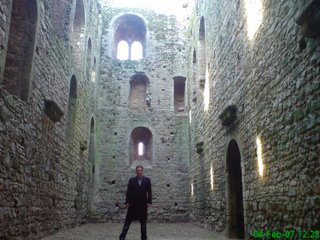


Here is an account of the insanity. I categorically deny that my driving is a hazard to human health.

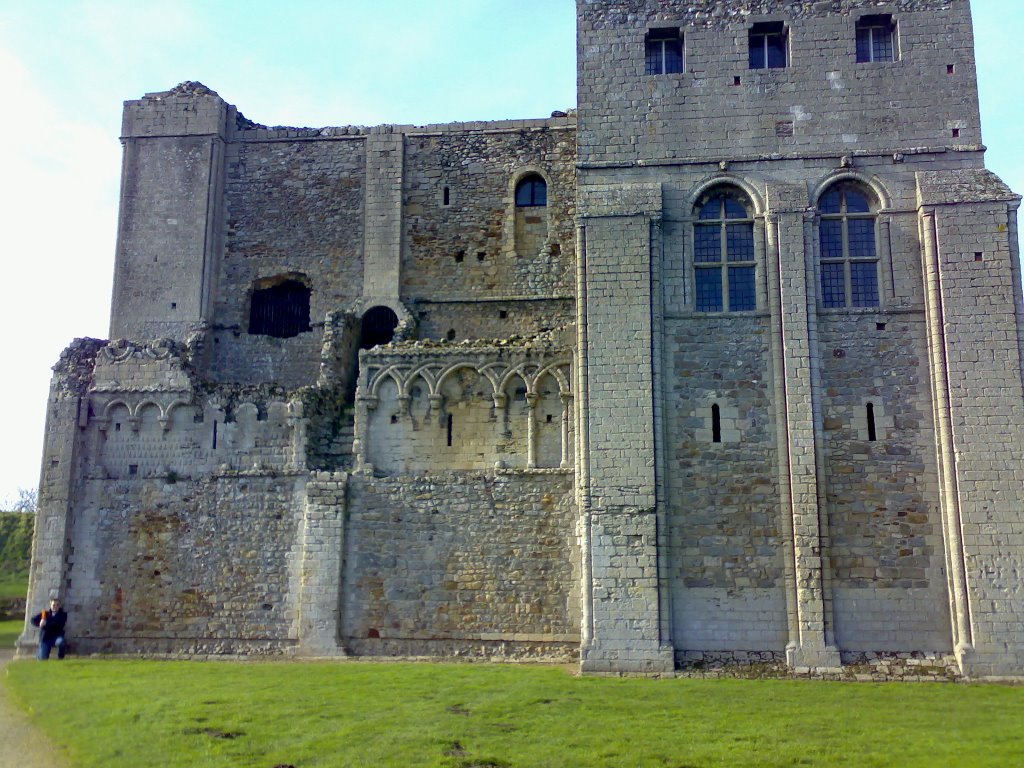

Here is an account of the insanity. I categorically deny that my driving is a hazard to human health.
The Future and Economics of Blogging
An article of mine discussing political blogs is the Sunday Feature over at the Birmingham University Conservative Forum blog. Read it; it's good.
Apologies for slow posting...
I've been at the Inner Temple IV and then on a quick trip to Castle Rising (more on this later). Normal service should now resume.
Saturday, February 03, 2007
Poor old socialists...
Mr. Eugenides highlights a truly amazing piece by Richard Gott celebrating the suspension of democracy in Venezuela. Despite the illiberalism of Gott's article I find it hard to get upset. It is difficult to get angry at the old fashioned socialists these days. They must know that when all of your political hopes are resting on Latin America the end of the line isn't far away. The Tranzis have major international institutions behind them, a sheen of respectability and a sense of optimism that lures dreamy idealists. Islamism has a limited appeal but can genuinely threaten the west and has demographic trends on its side. By contrast the old fashioned socialists have the pot of oil money Chavez has laid his grubby little hands on and a couple of other dingy South American republics. They're not exactly threatening, just a little sad.
Friday, February 02, 2007
The IRA, Islamists and Moral Sacrifice
Tony Blair is defending the RUC against criticism for possible collusion. A report by the Northern Ireland police ombudsman has alleged that members of the RUC special branch protected informers from criminal investigations for charges as serious as murder. I think there are two reasons this particular report might be less significant than it is being made out to be and that the more important debate is over the lessons this holds for what it takes to defeat political violence.
Firstly, the police officers accused of complicity have described the criticism as unfounded and challenged the writer of the report, Nuala O'Loan, to bring forward any evidence. While there seems no reason to assume that she is making this up it might turn out the scale or extent of the police involvement is over exaggerated. Until formal charges are brought these accusations should be considered somewhat suspect.
Secondly, it isn't quite as revelatory as is made out. Matthew Teague's article from early last year for the Atlantic highlighted the security services turning a blind eye to Republican informers. Unfortunately the article is only available to Atlantic subscribers which is a shame as the entire thing is utterly brilliant, however, this section should serve to illustrate the point I'm making:
That article created a huge stir and involves a very similar 'turning a blind eye' by the security services but did not have the same impact in British politics. I guess its story of IRA moles was a little too embarrassing for the Sinn Fein to make a stink about.
We are responding to these revelations in a similar manner to the way we responded to Republican claims of a shoot-to-kill policy. When people call themselves an army at war with your state, blow up innocent members of your citizenry and run a steady guerrilla war against the soldiers you send in to keep the peace shooting at them with the intention of killing is an entirely legitimate response. Holding the security services to the same standard that is applied to those working in peacetime is to deny them the capacity they need to fight what is somewhere between regular police work and a war and is a recipe for losing. However, we were never willing to defend the SAS and other organisations accused of shooting to kill and accepted Sinn Fein's standard of how a counter-insurgency should be fought. We were, and apparently are, unwilling to accept that it might take moral sacrifices to beat terrorists.
An analogy would seem to be with what is known as turning state's evidence in the United States. A strategy used by every Western country when dealing with organised crime is to give reduced sentences or even immunity from prosecution to those who are willing and able to prove exceptionally useful to more important or more numerous criminal investigations than that they are subject to. Take the example of James "Dick" Liddil who was a bank robber and murderer but was given immunity from prosecution. Turning a blind eye to the crimes of informers is an almost identical sacrifice of justice to giving people reduced sentences for turning state's evidence which is accepted with regular organised crime, far less lethal than the IRA.
It is necessary for the simple reason that crime, and even killing, is what gives credibility in these organisations. Those who are not criminals have no status and, hence, don't have much to tell the intelligence services. For that reason fighting terrorism will require us to deal with criminals and if we do not we are likely to wind up denying justice to far more victims as we prove unable to gather evidence against the rest of the organisation.
This was hugely effective. Teague highlights how the IRA wound up riddled with informers and it was this combined with other security measures which brought them to the negotiating table. The final settlement was not substantially different to that on offer throughout the troubles and the main British cave during negotiations was to release prisoners who would not have been in jail but for the armed struggle. Equally, the idea that Adams and McGuinness are independently reformed characters stretches plausibility. British security services defeated the IRA and, as a result, we are all safer and Northern Ireland has a chance at a better future. It is worth paying quite a price for such a result.
Justice is served because those who inform the security services pay a huge personal price. Teague's article is, in part, the story of the massive risk of torture and death the IRA informants took. In return for helping the police they face a lifelong threat of a violent death at the hands of the Republicans and exile from their community. They have not gotten off lightly.
The debate over whether we are willing to accept sacrifices in justice in order to fight terrorism is important because we are facing a new terrorist threat and may need to make the kind of utilitarian calculations with justice that were made with respect to the IRA again. The Times coverage of the plot to behead a Muslim soldier correctly focussed on how similar this is to the IRA strategy of enforcing community loyalty. New plots are being discovered with such regularity that it appears the problem of Islamist violence will get worse before it gets better. At the moment it is still a rather informal movement of isolated lunatics but this is not necessarily the way it will stay. Particularly if the movement becomes more organised we might find it necessary to make sacrifices in our values, possibly different ones to those required in the struggle against the IRA, in order to protect security and ensure justice is, more broadly, done.
More is at stake as the IRA could, at most, have caused more deaths and us to abandon the Unionists to their fate. While this would have been a tragedy the Islamists have the will to cause, as demonstrated by 9/11 and 7/7, near unlimited destruction and, through crimes like the murder of Theo van Gogh or the threat to Salman Rushdie, attack our most precious values such as freedom of expression. They pose an existential threat to the West as a civilisation. While we should not sacrifice who we are we have to be prepared to do what is necessary to beat them. Balancing these priorities is a key challenge for twenty-first century Britain but striking that balance will require a more honest appraisal of what is, and has been, necessary to defeat terror.
Firstly, the police officers accused of complicity have described the criticism as unfounded and challenged the writer of the report, Nuala O'Loan, to bring forward any evidence. While there seems no reason to assume that she is making this up it might turn out the scale or extent of the police involvement is over exaggerated. Until formal charges are brought these accusations should be considered somewhat suspect.
Secondly, it isn't quite as revelatory as is made out. Matthew Teague's article from early last year for the Atlantic highlighted the security services turning a blind eye to Republican informers. Unfortunately the article is only available to Atlantic subscribers which is a shame as the entire thing is utterly brilliant, however, this section should serve to illustrate the point I'm making:
"Fulton knew the voice, and its owner: Scap, one of the IRA's most feared interrogators. Fulton had once helped prepare safe houses for such interrogations, and knew that sometimes Scap's subjects survived.
Sometimes not.
Colleagues called both men "hard bastards"—true IRA boys, mothered by terrorism. They killed for the cause, time and again. But British spies had infiltrated the IRA, spreading deceit and rumors of deceit. The IRA had turned against itself. Scap couldn't say for sure who fought on his side.
The interrogation dragged on for hours. Fulton remained outwardly calm, and denied everything. Inwardly, though, he felt sick. He'd been spying on the IRA for a decade and a half, and he knew that if Scap broke him—if he admitted anything—he'd be a dead man—own a hole," in IRA slang.
So throughout the interrogation, Fulton sat stone-faced, blindfolded, and facing the wall. Double blind. He held tight to his secret: yes, he was a British spy.
But then, so was his interrogator."
That article created a huge stir and involves a very similar 'turning a blind eye' by the security services but did not have the same impact in British politics. I guess its story of IRA moles was a little too embarrassing for the Sinn Fein to make a stink about.
We are responding to these revelations in a similar manner to the way we responded to Republican claims of a shoot-to-kill policy. When people call themselves an army at war with your state, blow up innocent members of your citizenry and run a steady guerrilla war against the soldiers you send in to keep the peace shooting at them with the intention of killing is an entirely legitimate response. Holding the security services to the same standard that is applied to those working in peacetime is to deny them the capacity they need to fight what is somewhere between regular police work and a war and is a recipe for losing. However, we were never willing to defend the SAS and other organisations accused of shooting to kill and accepted Sinn Fein's standard of how a counter-insurgency should be fought. We were, and apparently are, unwilling to accept that it might take moral sacrifices to beat terrorists.
An analogy would seem to be with what is known as turning state's evidence in the United States. A strategy used by every Western country when dealing with organised crime is to give reduced sentences or even immunity from prosecution to those who are willing and able to prove exceptionally useful to more important or more numerous criminal investigations than that they are subject to. Take the example of James "Dick" Liddil who was a bank robber and murderer but was given immunity from prosecution. Turning a blind eye to the crimes of informers is an almost identical sacrifice of justice to giving people reduced sentences for turning state's evidence which is accepted with regular organised crime, far less lethal than the IRA.
It is necessary for the simple reason that crime, and even killing, is what gives credibility in these organisations. Those who are not criminals have no status and, hence, don't have much to tell the intelligence services. For that reason fighting terrorism will require us to deal with criminals and if we do not we are likely to wind up denying justice to far more victims as we prove unable to gather evidence against the rest of the organisation.
This was hugely effective. Teague highlights how the IRA wound up riddled with informers and it was this combined with other security measures which brought them to the negotiating table. The final settlement was not substantially different to that on offer throughout the troubles and the main British cave during negotiations was to release prisoners who would not have been in jail but for the armed struggle. Equally, the idea that Adams and McGuinness are independently reformed characters stretches plausibility. British security services defeated the IRA and, as a result, we are all safer and Northern Ireland has a chance at a better future. It is worth paying quite a price for such a result.
Justice is served because those who inform the security services pay a huge personal price. Teague's article is, in part, the story of the massive risk of torture and death the IRA informants took. In return for helping the police they face a lifelong threat of a violent death at the hands of the Republicans and exile from their community. They have not gotten off lightly.
The debate over whether we are willing to accept sacrifices in justice in order to fight terrorism is important because we are facing a new terrorist threat and may need to make the kind of utilitarian calculations with justice that were made with respect to the IRA again. The Times coverage of the plot to behead a Muslim soldier correctly focussed on how similar this is to the IRA strategy of enforcing community loyalty. New plots are being discovered with such regularity that it appears the problem of Islamist violence will get worse before it gets better. At the moment it is still a rather informal movement of isolated lunatics but this is not necessarily the way it will stay. Particularly if the movement becomes more organised we might find it necessary to make sacrifices in our values, possibly different ones to those required in the struggle against the IRA, in order to protect security and ensure justice is, more broadly, done.
More is at stake as the IRA could, at most, have caused more deaths and us to abandon the Unionists to their fate. While this would have been a tragedy the Islamists have the will to cause, as demonstrated by 9/11 and 7/7, near unlimited destruction and, through crimes like the murder of Theo van Gogh or the threat to Salman Rushdie, attack our most precious values such as freedom of expression. They pose an existential threat to the West as a civilisation. While we should not sacrifice who we are we have to be prepared to do what is necessary to beat them. Balancing these priorities is a key challenge for twenty-first century Britain but striking that balance will require a more honest appraisal of what is, and has been, necessary to defeat terror.
Thursday, February 01, 2007
Tranzis, the EU and More History
One of the most important ideas in conservatism today is the identification of transnational progressives as the new challenge to liberal democracy's preeminence as a universal philosophy; the next stage of history which refutes Fukuyama's prediction that there might be no new universal challenge. It's an idea which has been gaining speed for some time but is now becoming increasingly important as an identification of the internal threat to the Western community. It is the key socialist response to the failure of Communism and the challenge globalisation poses to European Social Democracy.
A few articles to read on the subject. Cosh Colby from Report Newsmagazine in October 2002 (I can't find an online version) has this description:
This article from John Fonte is the original identification of the movement which Cosh refers to. It is a truly brilliant article and worth printing out and reading if you can make time. Here's his conclusion:
John O'Sullivan's Gulliver's Travails from New Criterion in 2004 describes US relations with the transnational progressive institutions. This section is a good one:
This section indicts the EU's role in pushing this postnational, postdemocratic vision of the future:
Then this highlights why our continued membership is the best reason for hope and our staying out will not protect us from the rot. After highlighting that the Islamist threat to Europe will concentrate minds and hurt the transational progressive consensus in Europe he describes how the US might change the EU and what might happen if that fails:
Here's a new reason not to leave the EU. We need to be the liberal democratic sword in Europe once again and fight to reform the EU into a democratic institution otherwise, eventually, the tranzis will come for us.
A few articles to read on the subject. Cosh Colby from Report Newsmagazine in October 2002 (I can't find an online version) has this description:
""Tranzi": it's the hottest new term of abuse since "nerd." If you ever had the uneasy feeling than UN officials, humanrights commissions, ecunemical groups, Amnesty International and Liberal cabinet ministers were reading from the same hidden songsheet, John Fonte's influential new paper, "The Ideological War Within the West" (written for the foreign affairs journal Orbis, but much-distributed online), is for you. He argues that liberal democracy has spawned an "alternative ideology" within the western world which he calls "transnational progessivism." The handy nickname appears to be the brainchild of English commentator David Carr.
To sum up a complicated portrait, a Tranzi basically thinks like this: the basic building blocks of society are not individual citizens or families, but ethnic and gender groups. In the name of "fairness," all such groups should be represented in all professions in proportion to their percentage of the populace. "Diversity" is the imperative for a Tranzi: institutions must reflect and act on the "world views" of minority groups, and the populace itself may be reshaped through immigration, to enhance diversity.
Tranzis praise democracy, but have a markedly new definition of it: to them, "democracy" is not majority rule but balanced power-sharing among minority groups. The nationstate is the Tranzi's great enemy: he is not afraid to alter the teaching of history, "deconstructing" national narratives, nor does he have much use for the concept of citizenship. In the Tranzi utopia, "global governance" will supplant the nation-state. Tranzis habitually talk of the United States as an illegitimate and thuggish regime; not coincidentally, it is the main obstacle to their ultimate goals."
This article from John Fonte is the original identification of the movement which Cosh refers to. It is a truly brilliant article and worth printing out and reading if you can make time. Here's his conclusion:
"Scholars, publicists, and many others in the Western world-and especially in the United States, original home of constitutional democracy-have for the past several decades been arguing furiously over the most fundamental political ideas. Talk of a “culture war,” however, is somewhat misleading, because the arguments over transnational vs. national citizenship, multiculturalism vs. assimilation, and global governance vs. national sovereignty are not simply cultural, but ideological and philosophical, in that they pose such Aristotelian questions as “What kind of government is best?” and “What is citizenship?” In America, there is an elemental argument about whether to preserve, improve, and transmit the American regime to future generations or to transform it into a new and different type of polity. In the terms of contemporary political science we are arguing about “regime maintenance” vs. “regime transformation.”
In the final analysis, the challenge from transnational progressivism to traditional
American concepts of citizenship, patriotism, assimilation, and at the most basic level, to the meaning of democracy itself, is fundamental. It is a challenge to American liberal democracy. If our system is based not on individual rights, but on group consciousness; not on equality of citizenship, but on group preferences for non-citizens (including illegal immigrants) and for certain categories of citizens; not on majority rule within constitutional limits, but on powersharing by different ethnic, racial, gender, and linguistic groups; not on constitutional law, but on transnational law; not on immigrants becoming Americans, but on migrants linked between transnational communities; then the regime will cease to be “constitutional,” “liberal,” “democratic,” and “American,” in the understood sense of those terms, but will become in reality a new hybrid system that is “post-constitutional,” “post-liberal,” “post-democratic,” and “post- American.”
This intracivilizational Western conflict between liberal democracy and transnational progressivism began in the mid to late twentieth century; it accelerated after the Cold War and should continue well into the twenty-first century. Indeed, from the fall of the Berlin Wall in November 1989 until the attacks on the heart of the American republic on September 11, 2001, the transnational progressives were on the offensive.
Since September 11, however, the forces supporting the liberal-democratic nation state have rallied. Clearly, in the post-Sept. 11 milieu there is a window of opportunity for those who favor a reaffirmation of the traditional norms of liberal-democratic patriotism. The political will to seize this opportunity is unclear. Key areas to watch include official government policy statements for the use of force and the conduct of war; the use and non-use of international law; assimilation-immigration policy; border control; civic education in the public schools; and thestate of the patriotic narrative in popular culture."
John O'Sullivan's Gulliver's Travails from New Criterion in 2004 describes US relations with the transnational progressive institutions. This section is a good one:
"All that unilateralism amounted to in reality was the assertion that the United States would defend its vital interests in the last resort by force if it could not win the approval of the U.N. Security Council for doing so. That assertion rests on a combination of national sovereignty and the right of self-defense under the U.N. Charter. It would be endorsed by most U.N. member-states. And its modest logic was established in a BBC radio debate between Richard Perle, the foremost neoconservative strategist, and Baroness Shirley Williams, a moderate social democratic peer. Perle argued that the liberation of Iraq was either right or wrong. If Baroness Williams thought it was wrong, she should oppose it. If she thought it was right, why would she subordinate her opinion to a Chinese, Russian, or French veto in the Security Council? The only riposte to Perle’s question is that a statesman might subordinate one aim to gain a larger one. But that cannot be a reason for subordinating one’s national interest to a Chinese or Russian veto in principle. Of course, for the Tranzis such subordination is the point. They see it as the central principle of global governance and treat the mildest resistance to it as “unilateralism.”"
This section indicts the EU's role in pushing this postnational, postdemocratic vision of the future:
"In large measure the E.U. is a Tranzi project—though one still hobbled by scattered resistance from the voters and national governments. It has a missionary desire to export its distinctive postnational ideology to the rest of the world. It is increasingly driven by an ideological hostility to the United States as the classical liberal democratic alternative to its own post-democracy. And in particular it believes itself superior to the United States in dealing with premodern states and Islamist terrorism—preferring diplomacy to the war on terror and deferring to international bodies in principle."
Then this highlights why our continued membership is the best reason for hope and our staying out will not protect us from the rot. After highlighting that the Islamist threat to Europe will concentrate minds and hurt the transational progressive consensus in Europe he describes how the US might change the EU and what might happen if that fails:
"If that is to be accomplished conclusively, however, then the United States must also encourage those powers that share its distrust of postmodern structures—plainly Britain, Denmark, the Netherlands, and less plainly the Baltic states and some East European countries—to seek more liberal constitutional arrangements within the E.U. Until now, it has consistently discouraged any such resistance to whatever was described by Brussels as “integration.” Even a modest version of such reforms in the E.U. would be a major setback for the Tranzis—their Grenada—and have knock-on effects on their other projects such as the International Criminal Court. And, of course, the mere fact that the E.U. and the U.S. were fighting the war on terror on more American terms would tend, as after September 11, to reduce Tranzi power and influence throughout Acronymia—just as the current Iraqi troubles have helped them. Gulliver would give some Yahoo energy to the overrefined Houyhnhnms of Europe—and maybe get some patience and subtlety in return. That in turn would speed the defeat of the Islamists.
If, however, Mr. Steyn is right in his pessimism—and that’s the way to bet—then the United States will face a difficult future as a military superpower continually frustrated in middling matters by the resistance of international bodies. Europe and America will divide into two separate civilizations—the Anglosphere (minus England, plus India) and the Holy Secular Empire—uncomfortably housing a growing Muslim minority. Even in America, liberal democracy will be gradually transformed into a politically correct judicial oligarchy on Tranzi lines. The political atmosphere of both sides of the Atlantic will obstruct and delay the inevitable defeat of Islamist terrorism. And Gulliver, undefeated and undefeatable, will nonetheless apply for entry into the new euthanasia program brought in following a Supreme Court decision that cited judicial opinions from the International Human Rights Court in Harare."
Here's a new reason not to leave the EU. We need to be the liberal democratic sword in Europe once again and fight to reform the EU into a democratic institution otherwise, eventually, the tranzis will come for us.
Subscribe to:
Posts (Atom)


